

Agnolotti Recipe
Learn how to make classic Piedmontese agnolotti del plin with thin egg pasta and a deeply savory braised beef filling.
- Braising the beef with cabbage, wine, and aromatics creates a dense, concentrated filling that stays cohesive when ground and pipes cleanly into the pasta.
- Rolling the egg dough very thin ensures the plin fold seals properly and cooks evenly, keeping the focus on the rich filling instead of a thick layer of pasta.
- The plin pinch-and-cut method produces uniformly sealed dumplings quickly, creating a compact shape that holds the filling securely and cooks in minutes.
If you ask ten Piedmontese cooks what agnolotti are, you may get twelve answers. Agnolotti can be small or large; square or rectangular; pinched or not; served in broth, melted butter, al tovagliolo (on a napkin without sauce), or with roast drippings; and stuffed with meat, greens, or a mix of both. Trying to define a single "authentic" agnolotto is like trying to define a single "authentic" lasagna—good luck doing that without starting a fight in Bologna.
Still, there are patterns. In the hills of the Langhe and Monferrato—Barolo country—the form most closely associated with the name is agnolotti del plin. Plin means "pinch" in the dialect of Piedmont, and refers to the shaping technique: Long sheets of pasta are folded over a line of filling, then pinched at intervals before being separated with a pastry wheel. It's one of Italy's most efficient dumpling designs, producing dozens in a row without the fuss of cutting each one individually. If you've ever spent an afternoon punching out ravioli, the Piedmontese plin method feels like a rhythmic, easier alternative.
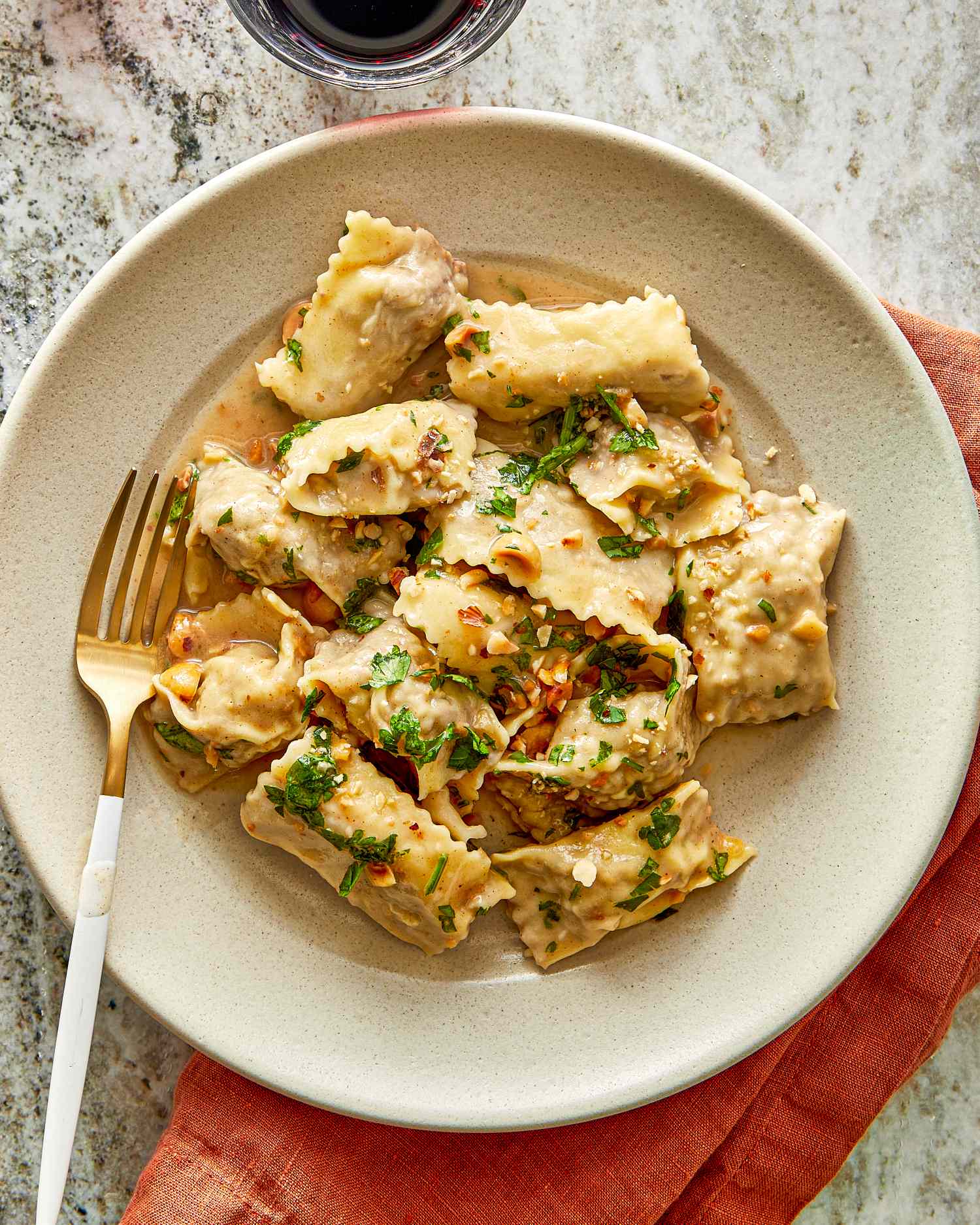
My recipe below follows the Langa-style tradition: a finely ground, cooked filling made from braised meat and greens, wrapped in thin sheets of egg dough and shaped with the classic plin pinch.
Agnolotti Through the Regional Lens
What becomes clear when looking through historical Piedmontese cookbooks—like the ones this recipe draws on—is that agnolotti weren't invented to be a singular, codified thing. They were a practical solution to the question of "What do we do with yesterday's roast?" That meant they evolved differently in each valley and village, depending on what meats, greens, and cheeses were available. Some older recipes include rabbit, pork shoulder, sweetbreads, calf brain, and even donkey. Many mix meats with greens like cabbage, spinach, or chard. Some call for a hint of tomato; others insist tomato never belongs anywhere near the filling.
Interestingly, fresh pasta recipes show variation too: Some use only eggs; others enrich with a splash of wine or oil; some add extra yolks; some keep the dough lean. But across these recipes, you start to see recurring ratios by volume or weight—roughly 100 grams of flour per egg, give or take—which produces a supple dough thin enough for plin's pinch-and-fold structure.
Despite the dizzying variety, Piedmontese cooks do agree on a few core principles. The filling should be cohesive—not runny, not chunky. The pasta should be an egg-enriched, soft-wheat doughsimilar to the region's other famous fresh pasta, tajarin. And it needs to be thin. Very thin. The shaping technique relies on that thinness: If the sheet is too thick, folding it over the filling creates a double layer so bulky it turns gummy once cooked, and the ratio of dough to filling swings out of balance. A properly thin sheet folds cleanly, seals easily with a light press, and lets the filling dominate instead of being smothered in dough.
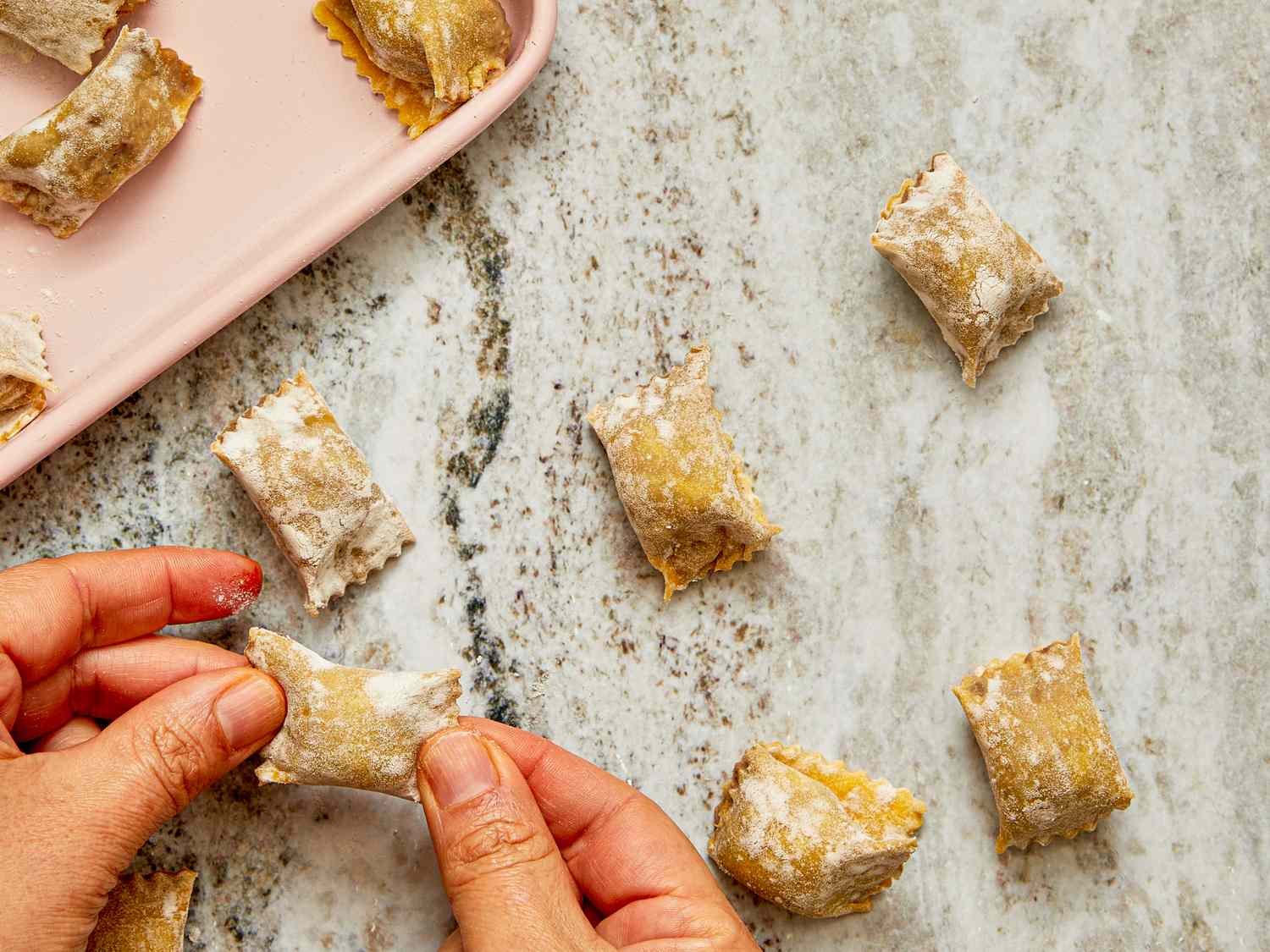
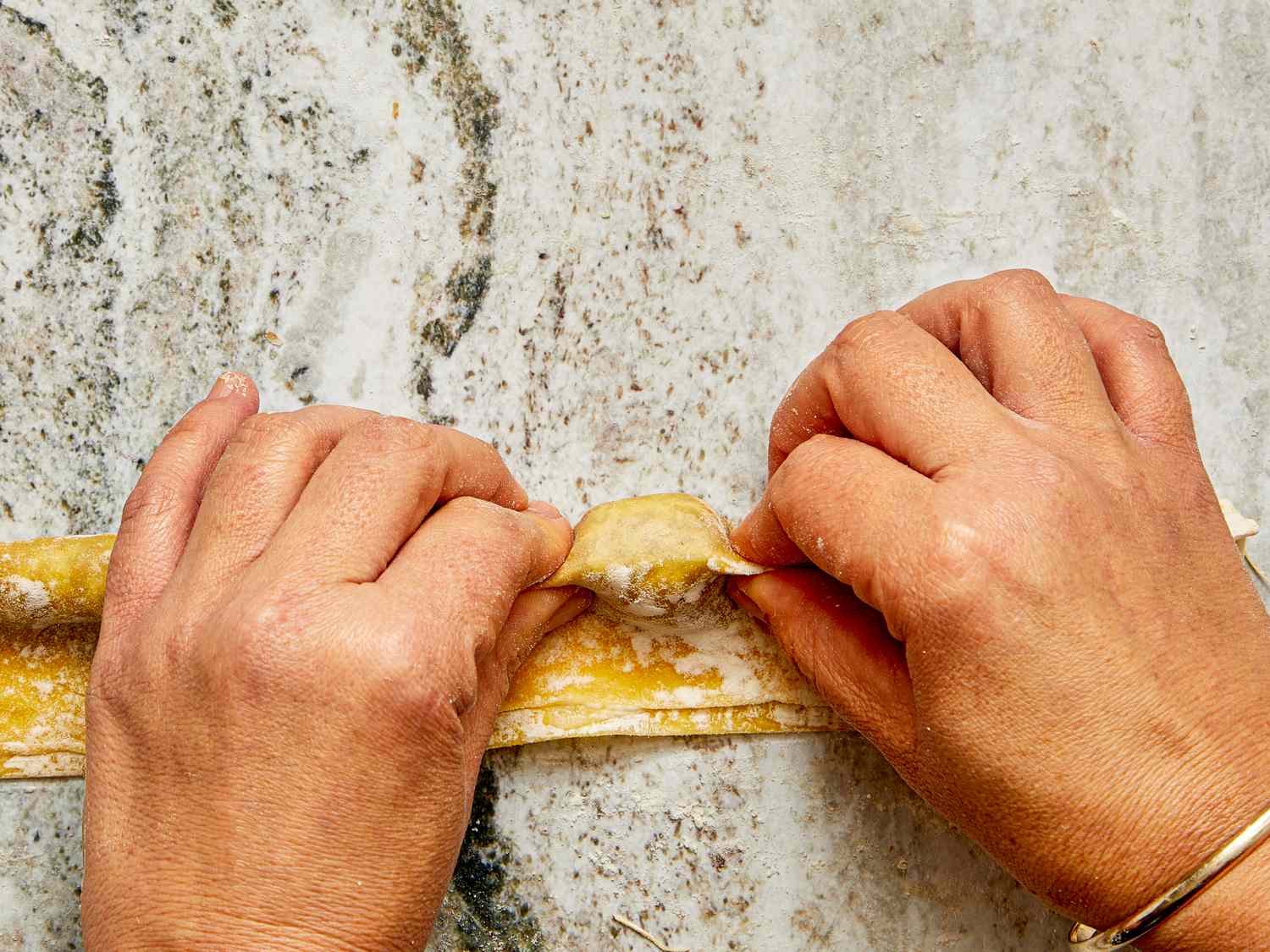
When you cut between the pinches with a fluted wheel, each dumpling folds slightly onto itself, creating the plump, curved shape that defines the plin. That pinch is both decorative and structural. Pinch too lightly, and you risk leaks. Pinch too hard and the dough tears.
Building the Filling
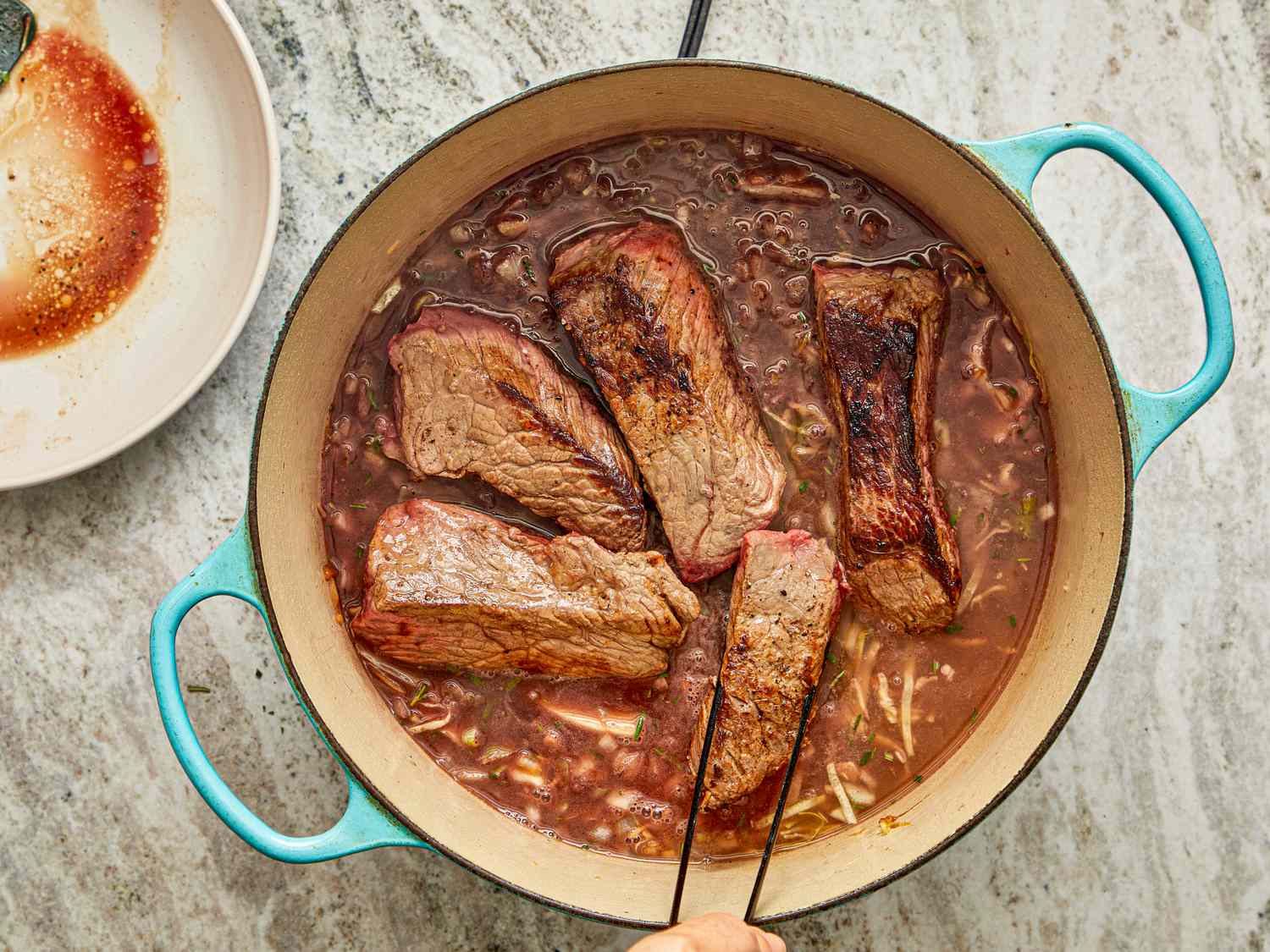
While many Langhe and Monferrato versions historically relied on leftover roasts for the filling, this recipe builds those flavors intentionally from scratch using beef short ribs for their rich, meaty flavor. They're braised with savoy cabbage, onion, garlic, rosemary, red wine, and broth—aromatics that show up again and again in Piedmontese recipes. Cabbage, especially, is a classic winter addition and softens into the meat, contributing sweetness and moisture without making the filling loose.
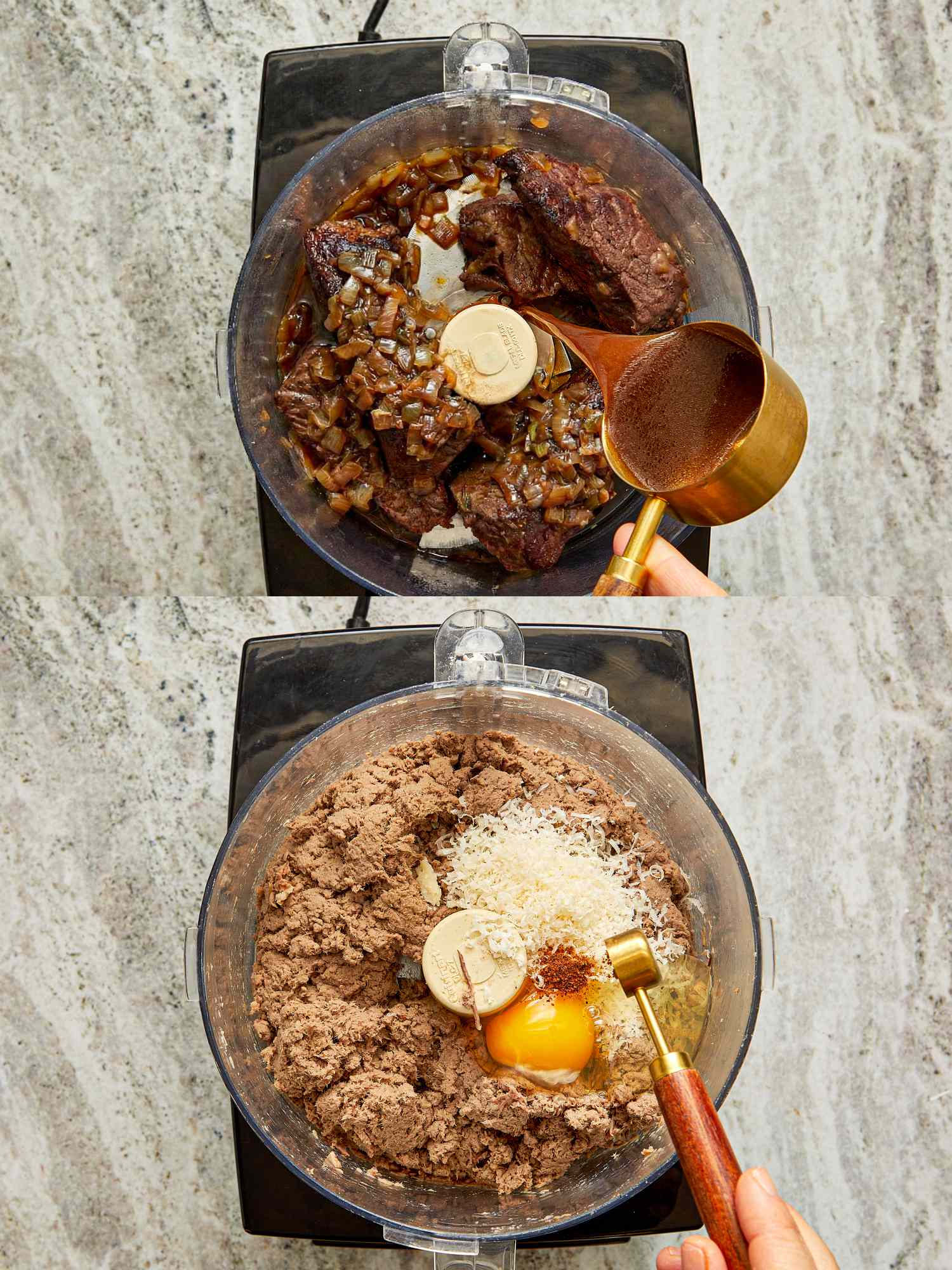
After cooking, the mixture is ground to the fine texture most Piedmontese recipes insist on. Traditional cooks used a mezzaluna or a meat grinder, running the mixture through until it resembled a pâté. I use a food processor for practicality, but the goal is the same: To produce a filling that pipes cleanly and holds its shape during cooking. Grana Padano, an egg, and a touch of nutmeg complete the mixture, giving it structure and rounding the flavor.
How to Shape Agnolotti del Plin
For anyone unfamiliar with this shaping method, plin can look intimidating at first. But with just a little practice, you'll find your rhythm and realize how astonishingly efficient it is.
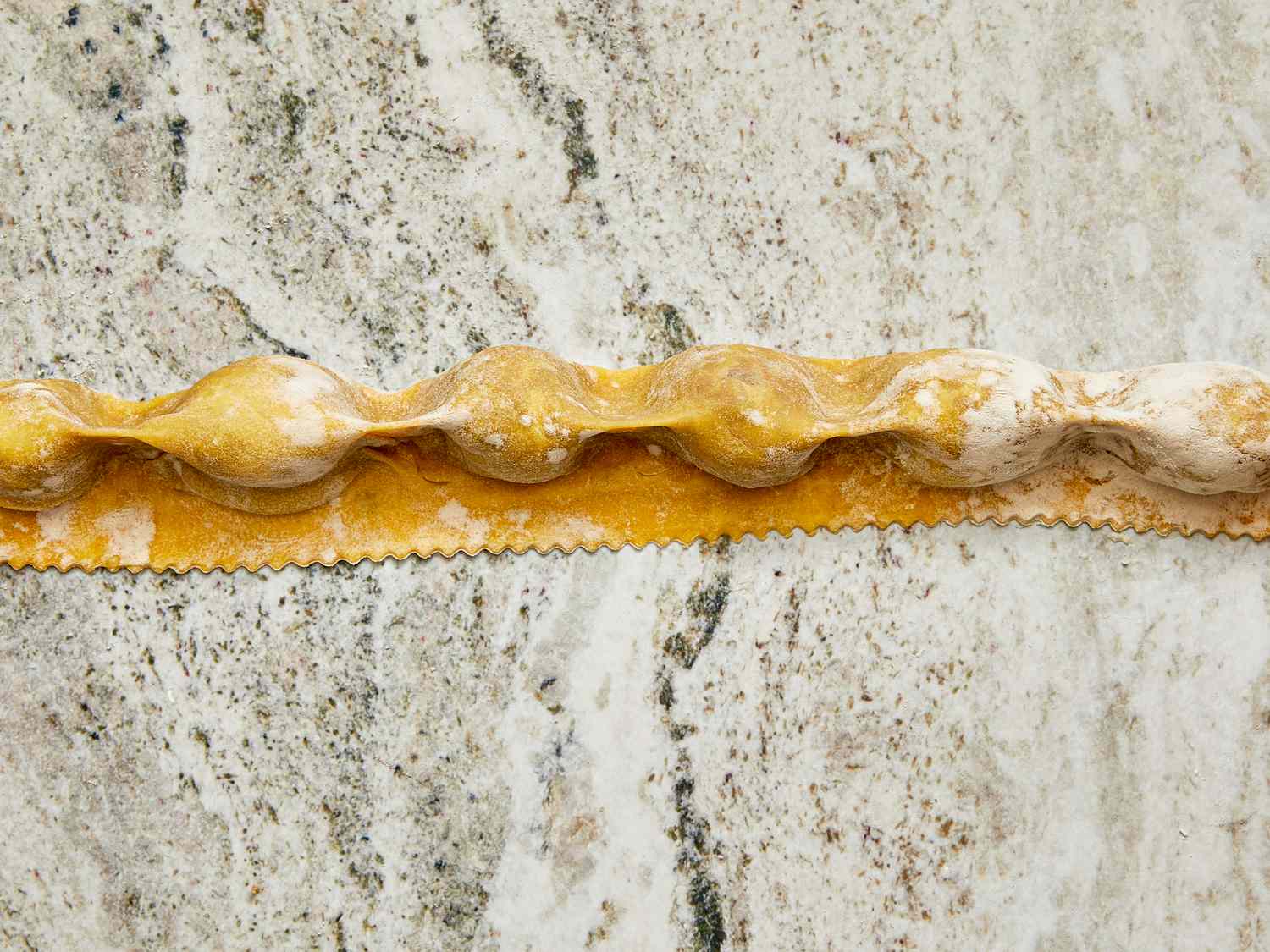
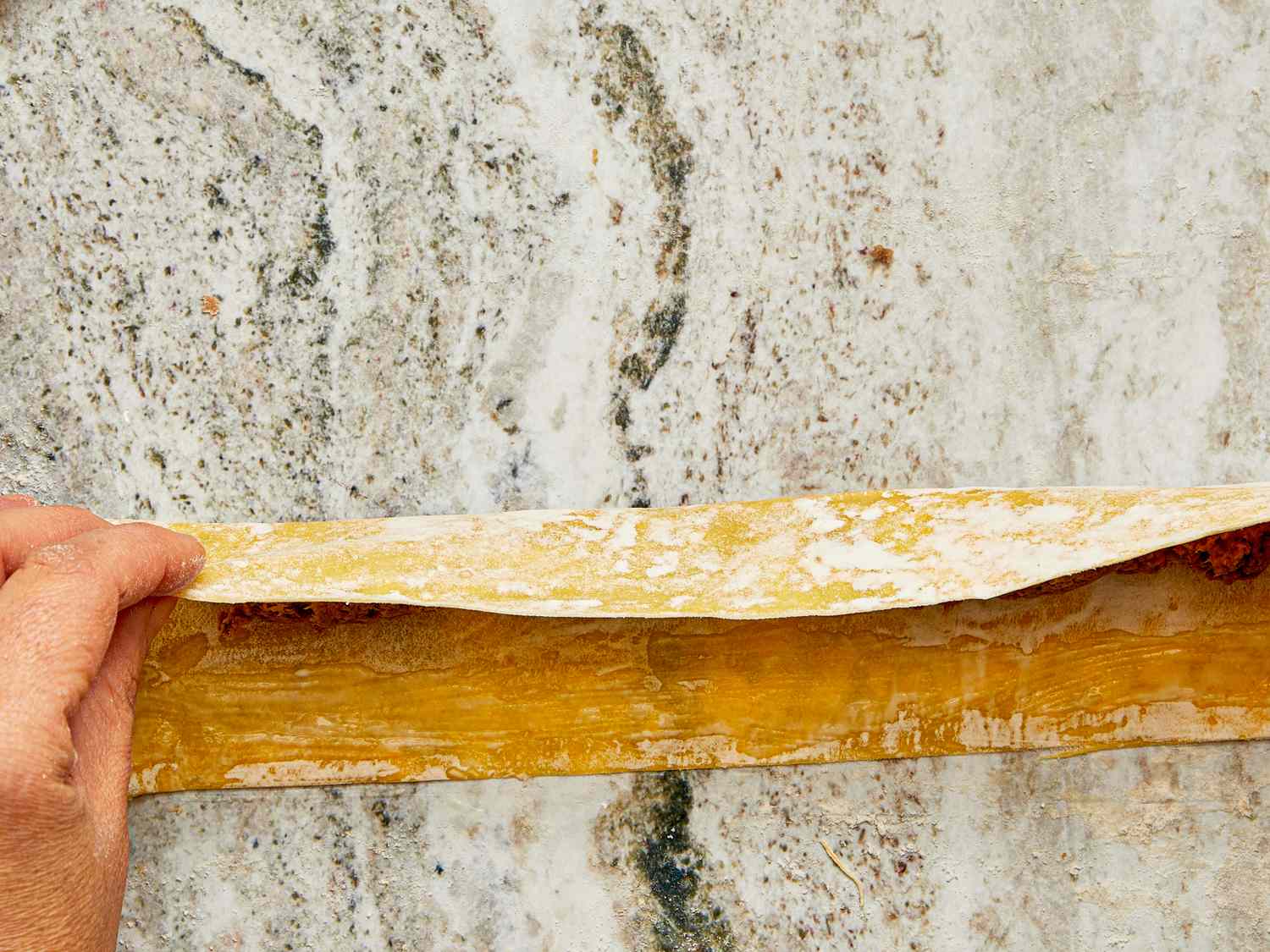
Trim a sheet of pasta to a consistent width, pipe a straight line of filling down the center, then fold the bottom edge up to meet the top. Seal lightly—just enough so the dough sticks to itself—then pinch at one-inch intervals to create individual pockets. If your pinches end up slightly smaller or larger, don't worry. There's no single "correct" size. As long as your dough is rolled to an even thinness and the filling is piped evenly, the agnolotti will cook at the same rate.
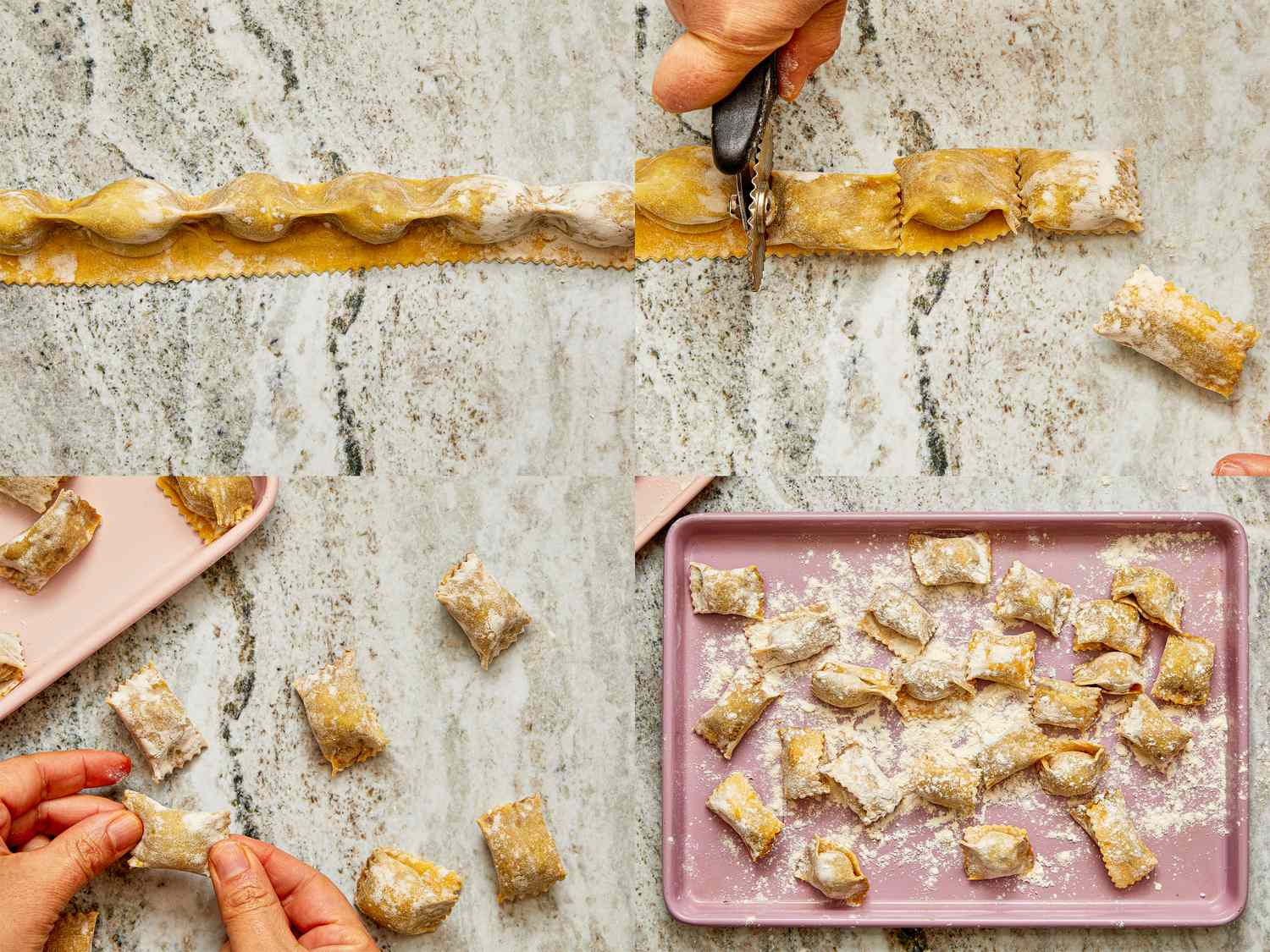
A confident roll of the pastry wheel between each pinch separates the dumplings and folds them in one motion. It's an incredibly fast way to produce a large batch of filled pasta.
How to Sauce and Serve
Agnolotti are traditionally served in ways that highlight the filling rather than overshadow it. Popular options include:
- with roast drippings (sugo d'arrosto),
- with brown butter and sage,
- in broth,
- or al tovagliolo—literally "on the napkin," meaning on a warm cloth with no sauce, a minimalist presentation that showcases the pasta and filling,
- and, when the season allows (and the wallet allows it), with shaved white truffle.
My version nods to Piedmont's hazelnut heritage—home of the tonda gentile delle langhe—by finishing the pasta in brown butter with toasted hazelnuts and a splash of red wine vinegar. The vinegar brightens the beef's richness, creating a meaty flavor that pops.
This recipe sits firmly within the Piedmontese tradition: thin, egg-rich soft-wheat dough; a cooked, finely ground filling balancing meat and greens; a shaping method that produces small, efficient dumplings; and a simple sauce that amplifies rather than competes. It's not a replica of a pasta from any one trattoria, but unmistakably part of the entire lineage.
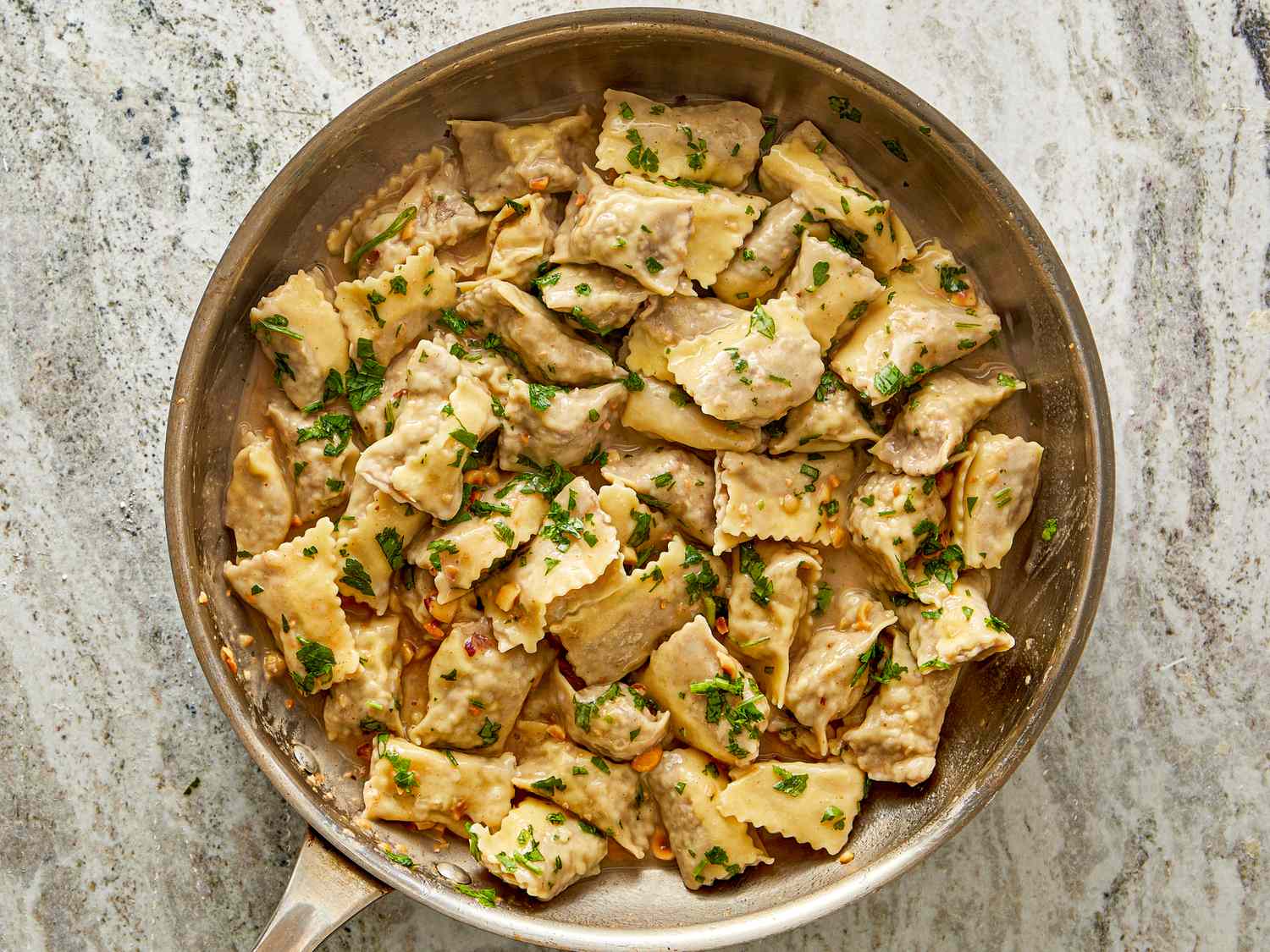
Recipe Details
Agnolotti Recipe
Save Print Keep Screen Awake
Ingredients
For the Filling:
-
1 1/2 pounds (680 g) boneless beef short ribs, excess fat trimmed and cut into 1 1/2-inch pieces
-
Kosher salt
-
Freshly ground black pepper
-
2 tablespoons (28 g) unsalted butter
-
2 cups chopped Savoy cabbage
-
1 small onion (4 ounces; 113 g), finely chopped
-
3 medium cloves garlic, finely minced
-
2 teaspoons minced fresh rosemary
-
1/2 cup (120 ml) dry red wine
-
2 cups (480 ml) homemade beef stock or chicken stock or store-bought low-sodium chicken broth
-
1 ounce (28 g) Grana Padano cheese, finely grated (1/2 cup)
-
1 large egg
-
1/8 teaspoon ground nutmeg
For the Pasta and Sauce:
-
8 tablespoons (113 g) unsalted butter
-
1/4 cup (about 30 g) hazelnuts, toasted, skinned, and coarsely chopped
-
1/2 teaspoon plus 2 tablespoons Diamond Crystal kosher salt; for table salt, use half as much by volume
-
2 teaspoons (10 ml) red wine vinegar
-
2 tablespoons minced flat-leaf parsley leaves and tender stems
-
1 Fresh Egg Pasta dough recipe (1 pound), made through step 4
Directions
-
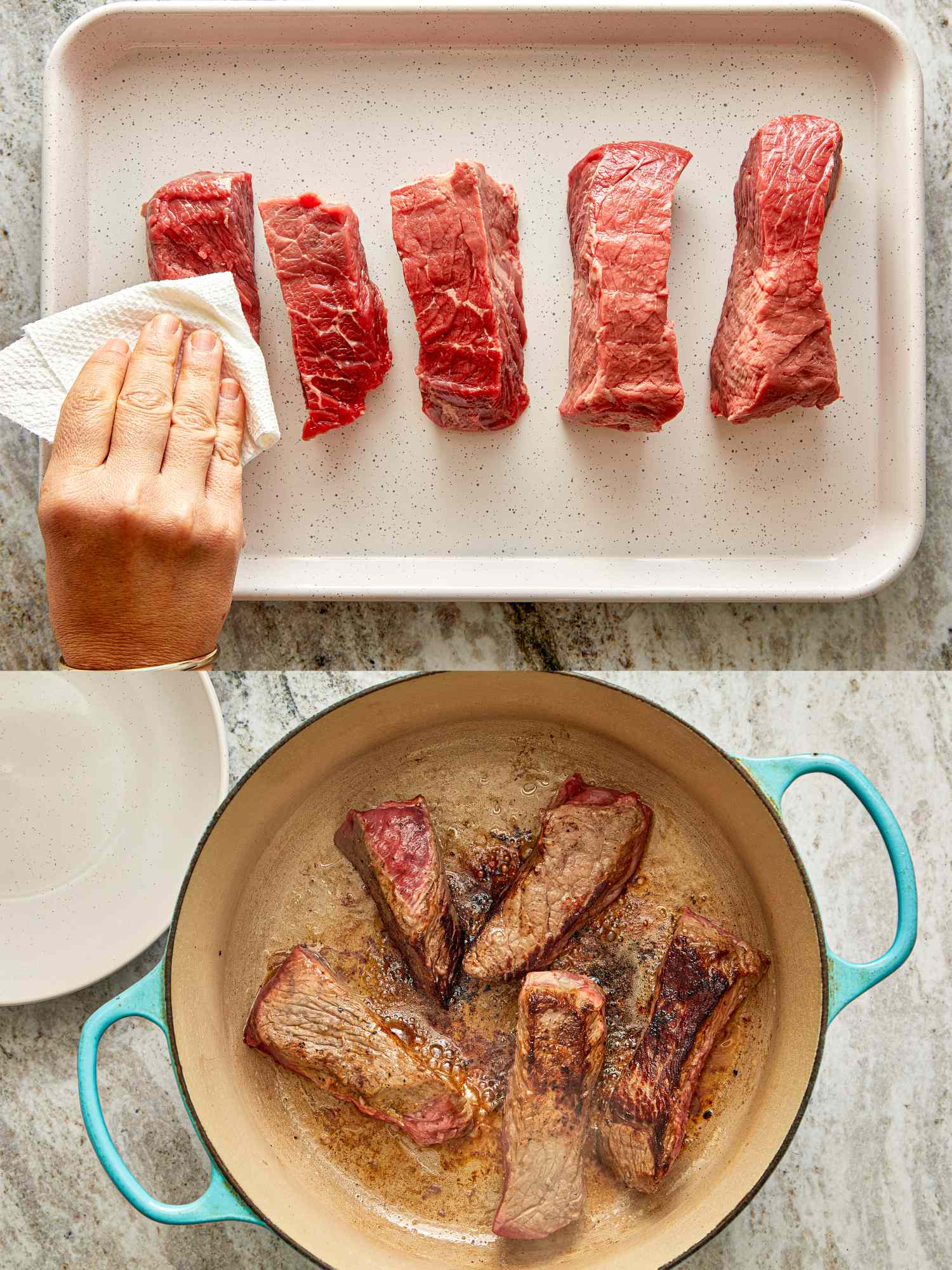
For the Filling: Pat beef dry with paper towels and season with salt and pepper. In a Dutch oven or large sauce pot, melt butter over medium-high heat until foaming. Brown beef on all sides, flipping as needed, 7 to 10 minutes; transfer to a plate.
-
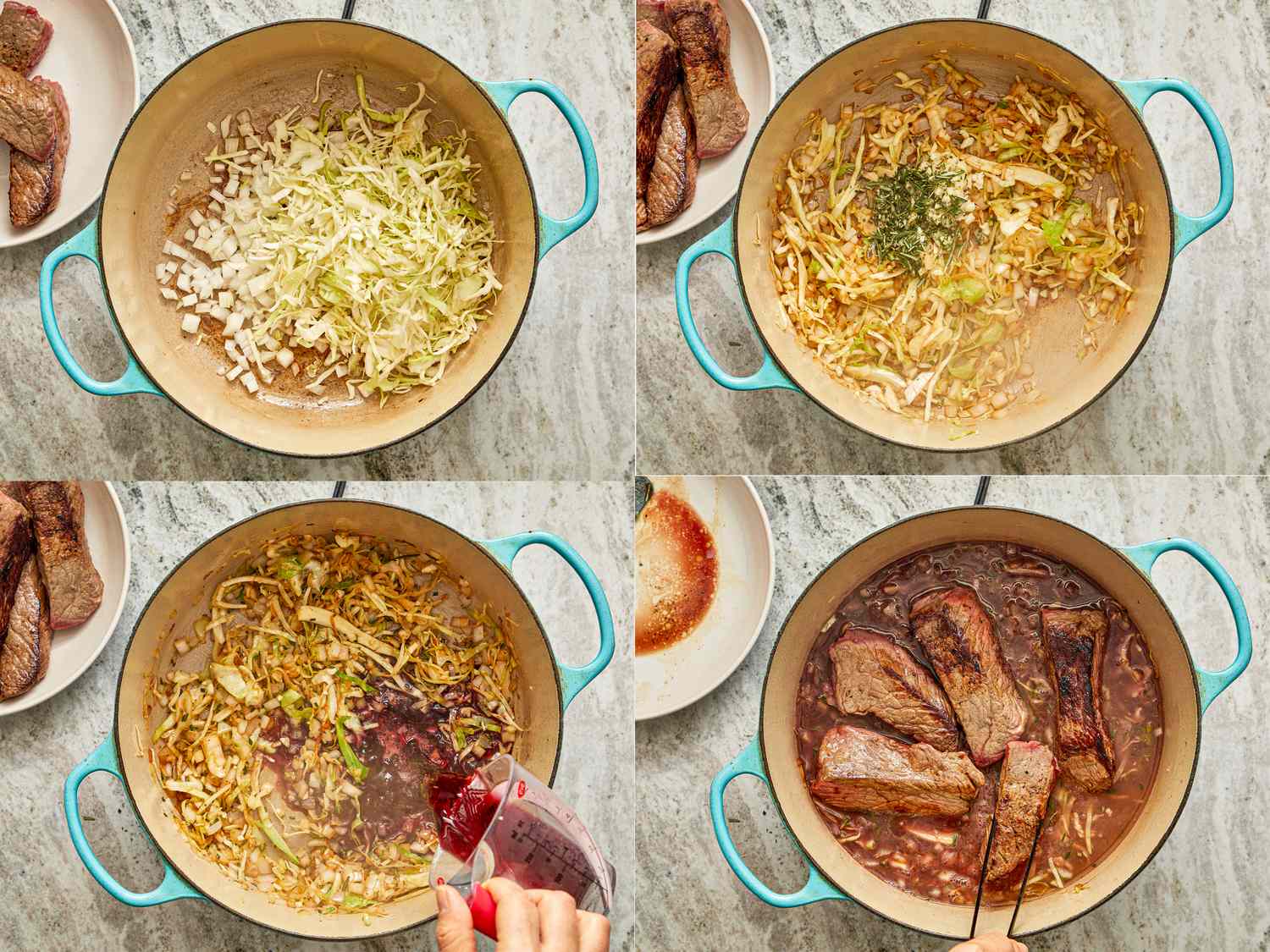
Add cabbage and onion to fat remaining in pot and cook over medium heat, stirring often, until softened, about 3 minutes. Stir in garlic and rosemary and cook until fragrant, about 30 seconds. Stir in wine, scraping up any browned bits, then stir in stock or broth. Return beef and any accumulated juices to pot and bring to a simmer. Reduce heat to medium-low, cover, and simmer until beef is tender, about 1 hour.
![Steps in cooking vegetables in a pot broth added stirfrying beef added to the pot]()
-
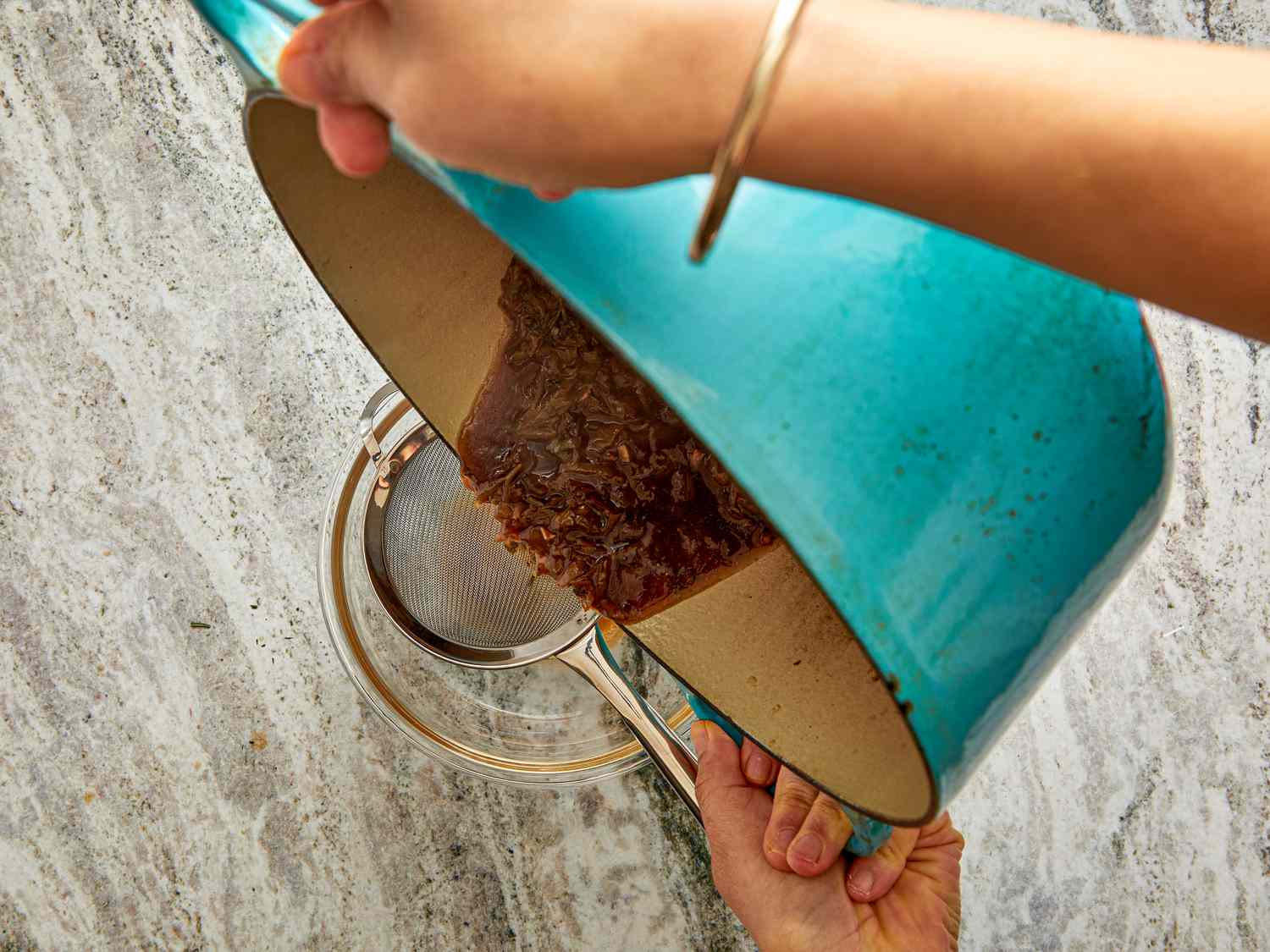
Drain beef mixture in a fine-mesh strainer set over a bowl. Reserve cooking liquid separately. Let cool slightly, about 20 minutes.
-
Transfer beef mixture and 1/4 cup of cooking liquid to food processor; process until finely ground, about 1 minute, scraping down sides of bowl as needed. Add Grana Padano, egg, and nutmeg and process until combined, about 30 seconds. Transfer filling to bowl; refrigerate for 30 minutes. (Filling can be refrigerated for up to 24 hours; bring to cool room temperature before proceeding with recipe.)
![Two steps in a food preparation process using a food processor with ingredients being added and mixed]()
-
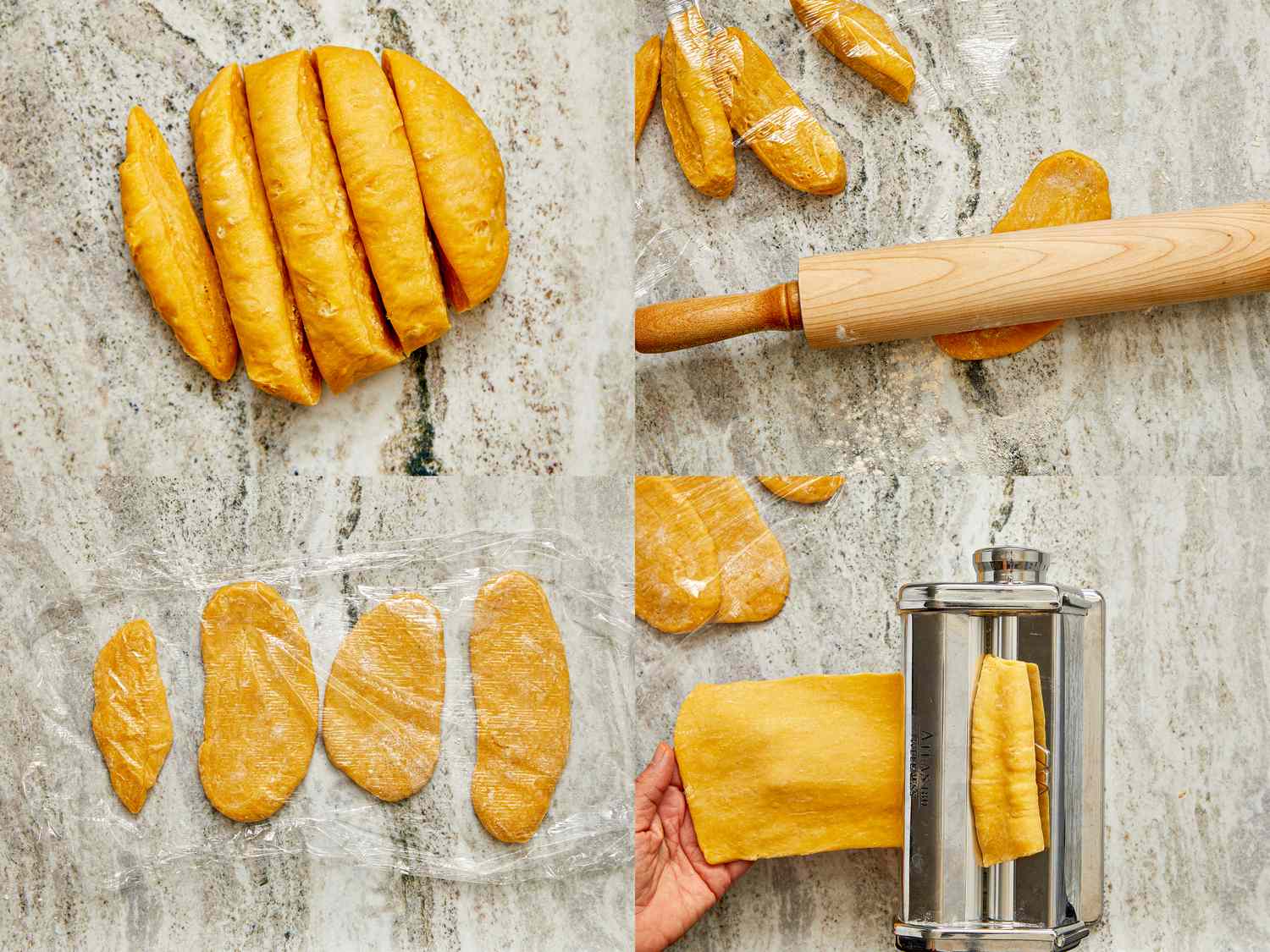
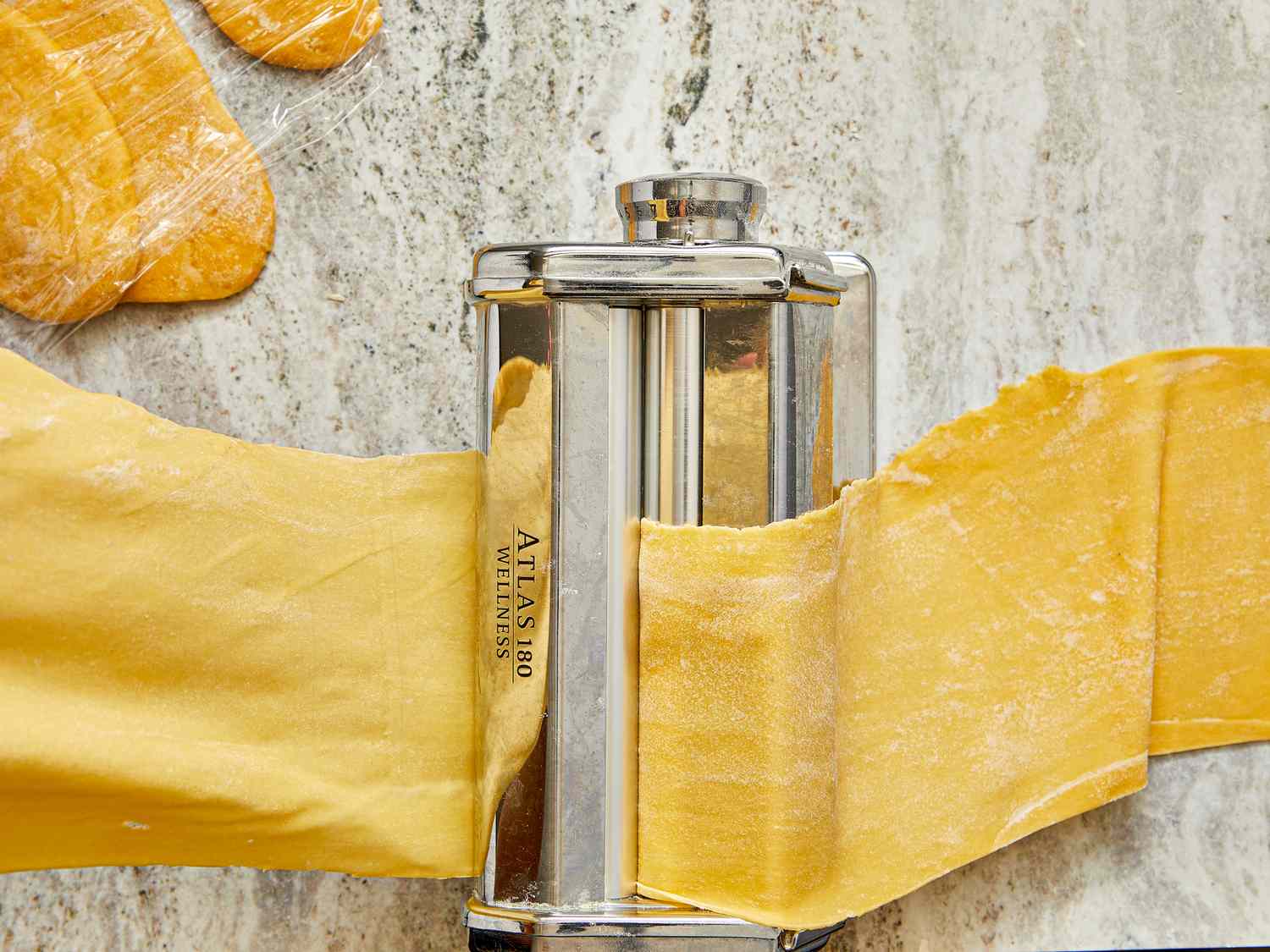
For the Pasta and Sauce: Transfer dough to a clean counter, divide into 5 pieces, and cover with plastic wrap. Flatten 1 piece of dough into a 1/2-inch-thick disk. Using a pasta machine with rollers set to widest position, feed dough through rollers twice. Bring the tapered ends of the dough toward the middle and press to seal. Feed the dough, seam side first, through the rollers again. Repeat feeding the dough, tapered end first, through the rollers set at the widest position, without folding, until the dough is smooth and barely tacky. (If dough sticks to fingers or rollers, lightly dust with flour and roll again.)
-
Narrow rollers to the next setting and feed dough through rollers twice. Continue to progressively narrow rollers, feeding dough through each setting twice, until the dough is very thin and semi-transparent. (If dough becomes too long to manage, halve crosswise.) Transfer sheet of pasta to liberally floured sheet of parchment paper. Cover with second sheet of parchment, followed by damp kitchen towel, to keep pasta from drying out. Repeat rolling with remaining 4 pieces of dough, stacking pasta sheets between floured layers of parchment.
![Sheet of pasta being rolled through a manual pasta machine on a countertop]()
-
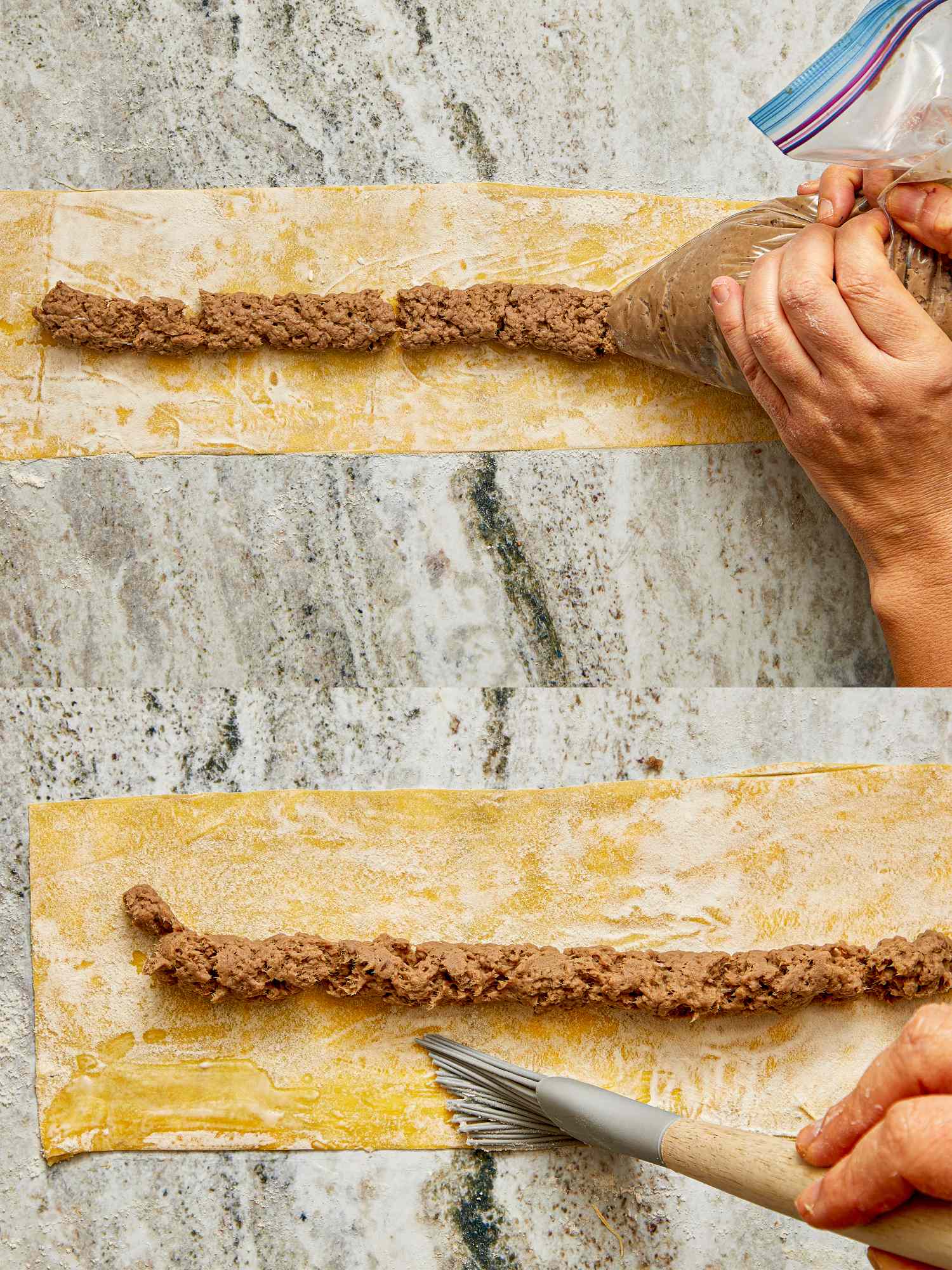
Liberally dust 2 rimmed baking sheets with flour. Transfer filling to a 1-gallon zipper-lock bag or pastry bag. Snip off 1 corner of bag to create 3/4-inch opening. Position 1 pasta sheet on lightly floured counter with long side parallel to counter edge (keep remaining sheets covered). Using pizza cutter or sharp knife, trim pasta into uniform 4-inch-wide sheet. Pipe filling lengthwise down center of sheet, leaving 1-inch space at each end. Lightly brush edges with water.
-
Fold bottom edge of pasta over filling until flush with top edge. Gently press to seal the long edge of the pasta flush to the filling to form one long tube; leave the narrow ends unsealed.
![Hand lifting a sheet of filled pasta to show its layered structure]()
-
With fingers, pinch filled portion of pasta together at 1-inch increments to create individual sections.
-
Using a fluted pastry wheel or pizza cutter, trim excess dough from filled pasta strip, leaving 1/4-inch border on ends and 1-inch border on top. Starting at bottom edge of strip, roll pastry wheel away from you in one motion between pinched sections to fold and seal dough and separate agnolotti. Pinch edges of each agnolotto to reinforce seal, then transfer to prepared sheets. Repeat with filling and shaping remaining pasta sheets (you should have about 75 agnolotti). Let agnolotti sit uncovered until dry to touch and slightly stiffened, about 30 minutes.
![Steps showing preparation and cutting of filled pasta into individual pieces on a textured surface]()
-
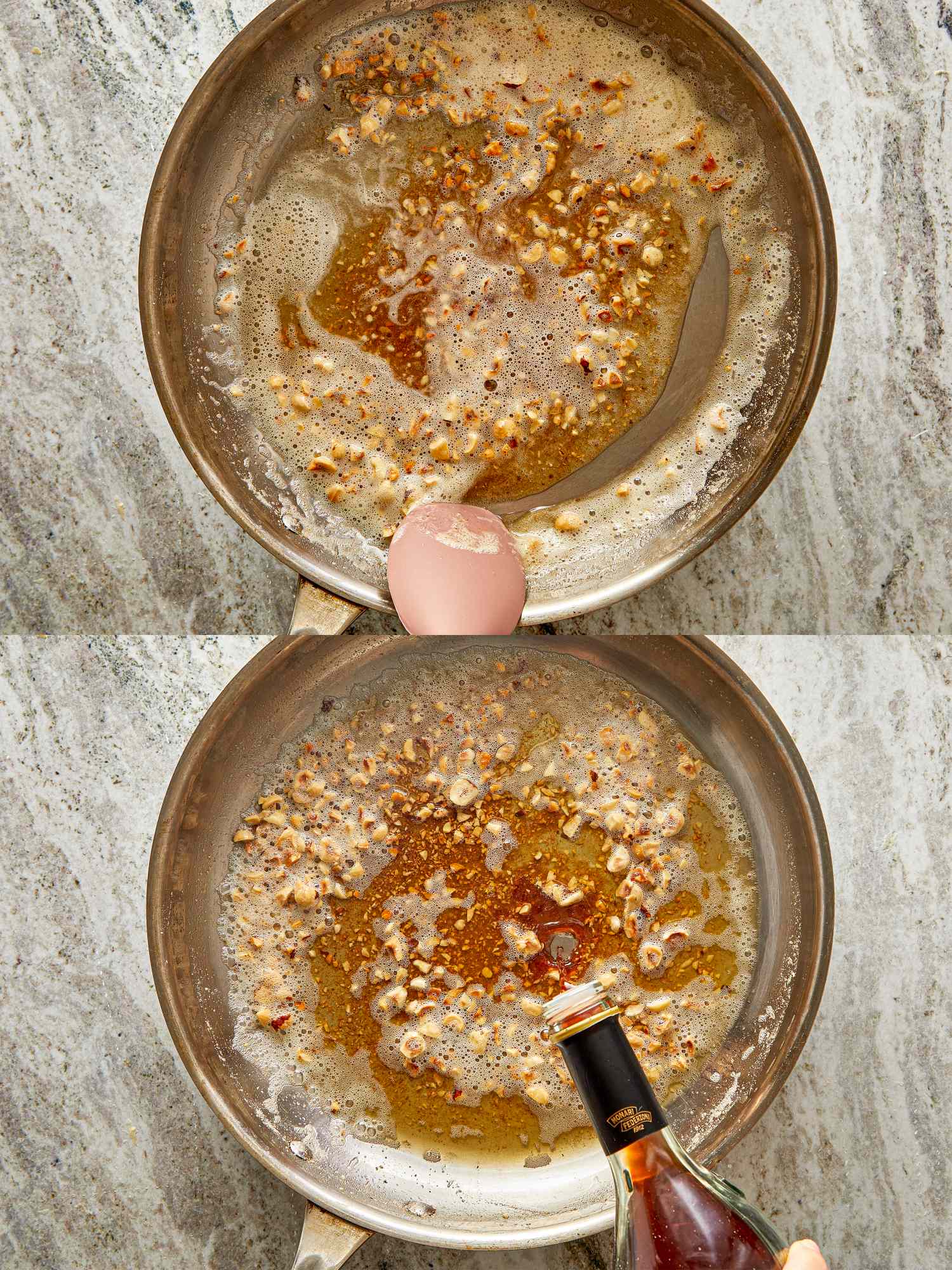
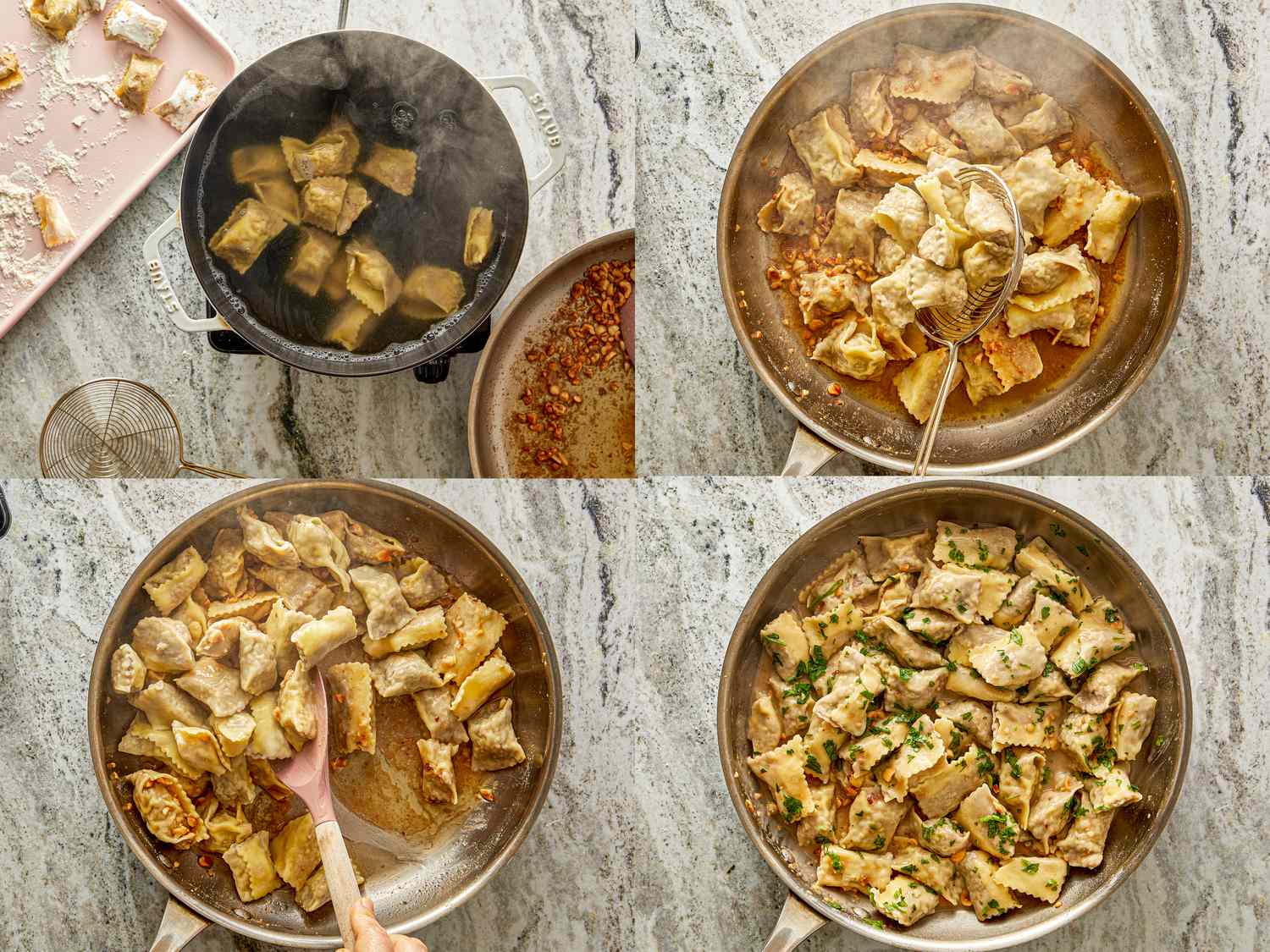
For Cooking: In a 12-inch high-sided skillet, cook butter, hazelnuts, and 1/2 teaspoon kosher salt over medium-heat, swirling skillet constantly, until butter is melted, has golden-brown color, and releases nutty aroma, about 3 minutes. Off heat, stir in vinegar; set skillet aside.
-
Bring 4 quarts water to boil in large pot. Add 2 tablespoons kosher salt and half of agnolotti and and simmer gently, stirring often, until edges of pasta are al dente, 3 to 4 minutes. Using slotted spoon, transfer agnolotti to skillet, gently toss to coat, and cover. Return cooking water to boil and repeat with remaining agnolotti; transfer to skillet. Add 1/4 cup cooking water to cooked agnolotti in skillet and gently toss to coat. Sprinkle with parsley and serve immediately.
![A collage showing stages of preparing and cooking a dish sauted filled pasta pieces garnished with herbs]()
Special Equipment
Dutch oven or large sauce pot, food processor, 1 gallon zipper lock bag or pastry bag, pasta maker, pastry brush, fluted pastry wheel or pizza cutter, 12-inch skillet
Make-Ahead and Storage
Agnolotti can be wrapped with plastic and refrigerated for up to 4 hours or chilled in freezer until firm, then transferred to zipper-lock freezer bag and frozen for up to 1 month. If frozen, do not thaw before cooking; increase simmering time to 4 to 5 minutes.
- The Latest
- Recipes
- Holidays & Seasons
- Mains
- Italian